

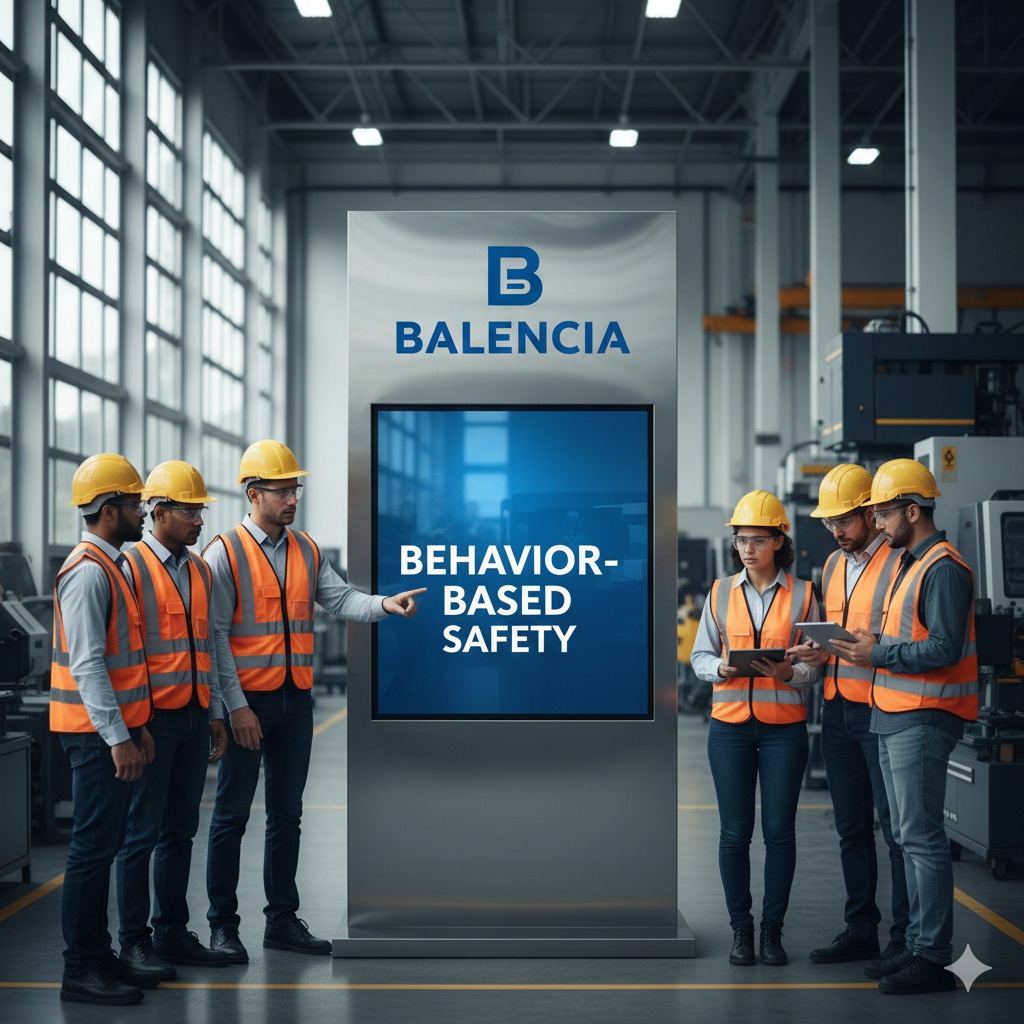
How Can Human Errors Be Reduced and Productivity Increased?
Despite the presence of safety regulations, procedures, and modern equipment, human error remains the leading cause of many workplace accidents.
This is where Behavior-Based Safety (BBS) emerges as one of the most important modern concepts in occupational health and safety.
In this article, we explain the concept of behavioral safety, why it is a key factor in reducing accidents and improving productivity, and we present practical, real-world examples.
🔍 What Is Behavioral Safety?
Behavioral safety is an approach that focuses on human behavior in the workplace, rather than relying solely on equipment or procedures. It aims to:
Identify unsafe behaviors
Modify incorrect behaviors
Continuously reinforce safe behaviors
📌 Core Idea:
Accidents do not occur only because rules are absent, but because they are not followed.
⚠️ Why Are Human Errors a Major Cause of Accidents?
Professional statistics indicate that a large percentage of accidents result from:
Rushing
Overconfidence
Familiarity with hazards
Poor communication
Ignoring safety procedures
Even in the most well-equipped workplaces, the human factor remains the hardest variable to control.
🎯 Objectives of Implementing Behavioral Safety
A successful Behavioral Safety Program aims to:
Reduce accidents and injuries
Strengthen the safety culture within the organization
Improve compliance with procedures
Increase workers’ awareness of risks
Enhance overall performance and productivity
🛠️ Key Elements of a Behavioral Safety Program (BBS)
1️⃣ Behavioral Observation
Monitoring daily behaviors during work
Recording safe and unsafe behaviors
Without blame or punishment
📌 The goal is understanding, not accountability.
2️⃣ Immediate Feedback
Correcting unsafe behavior on the spot
Encouraging safe behavior
Using positive language
📌 Positive feedback is more effective than punishment.
3️⃣ Employee Participation
Involving workers in identifying hazards
Listening to their suggestions
Making them part of the solution
The greater the participation, the higher the level of commitment.
4️⃣ Safety Leadership
Management’s commitment to safe behavior
Applying rules equally to everyone
Leading by example, not by orders
📌 Workers imitate what they see, not what they are told.
🧩 Practical Examples from the Workplace
🏗️ Example 1: Construction Site
A worker does not wear a helmet
Real reasons: lack of risk perception + time pressure
Behavioral solution:
Awareness
Employee involvement
Reinforcing positive behavior
🏭 Example 2: Manufacturing Plant
Bypassing operating procedures to save time
Result: repeated accidents
Solution:
Behavioral analysis
Improving the work environment
Changing the “speed before safety” culture
📈 How Does Behavioral Safety Increase Productivity?
Contrary to common belief, safety does not reduce productivity—it enhances it:
Fewer work stoppages due to accidents
Reduced absenteeism and injuries
Improved morale
Higher performance efficiency
📌 A safe worker is a productive worker.